From Excel to cloud dashboards: The shift to real-time production tracking.
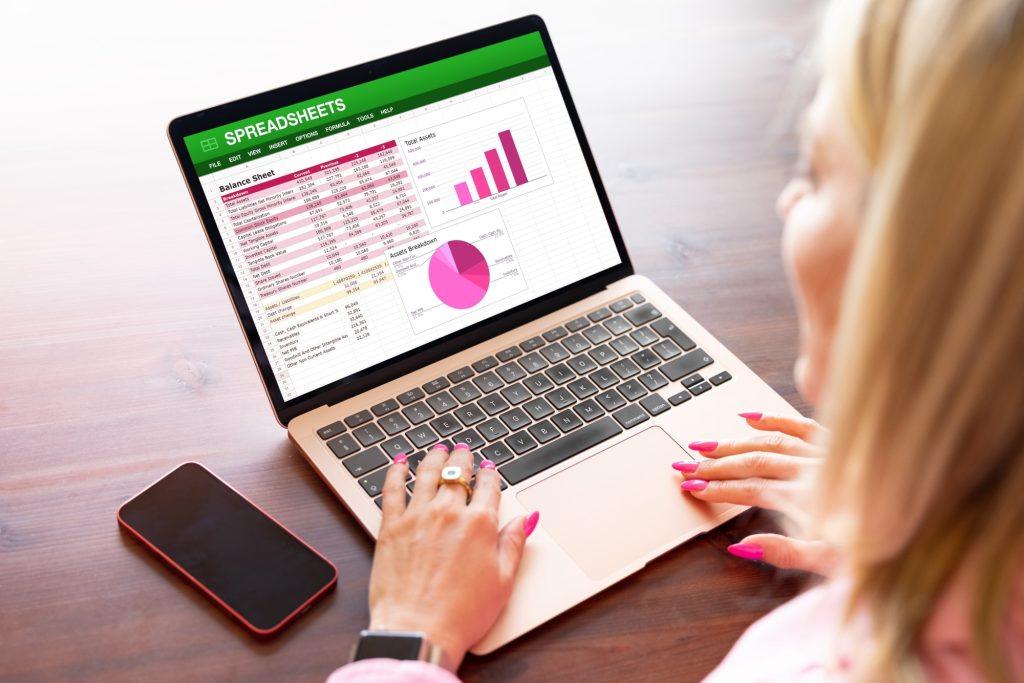
For years and years, spreadsheets have been the backbone of manufacturing reporting. They’ve been familiar, flexible and widely available across teams. But as production environments become faster, more complex and more competitive, the limitations of spreadsheets are becoming harder to ignore.
Manufacturers are now under increasing pressure to make quicker and better-informed decisions. That means moving away from manual processes and towards more connected, intelligent systems that support visibility across the entire operation. This is where the shift begins to replace Excel as the primary tool for performance tracking.
The problem with spreadsheets in modern manufacturing.
While spreadsheets have certainly served their purpose well, they were never designed for the pace of today’s production environments! Data is often manually entered, updated at set intervals and also stored in silos across departments. This creates delays, inconsistencies and the risk of human error… which is always inevitable.
When teams rely on spreadsheets for real time production tracking, they’re often working with information that is already out of date. By the time figures are compiled and shared, the opportunity to respond has often passed.
This lack of immediacy can impact everything from output efficiency to quality control. It also makes it difficult for managers to spot trends or respond to issues as they happen. As a result, many manufacturers are actively looking to replace Excel with more dynamic, connected solutions.
Moving towards smarter systems…
The shift away from spreadsheets isn’t just about technology… It’s about improving how teams work together. Modern manufacturers are increasingly adopting business workflow software that brings production data, reporting and communication into one place.
Unlike spreadsheets, these systems are designed to support real time production tracking, allowing teams to see what is happening on the shop floor as it happens. This creates a shared source of truth across departments, reducing the need for manual updates and repeated data entry.
As more organisations explore cloud based manufacturing, they’re discovering that visibility and accessibility are just as important as data accuracy. Cloud platforms allow teams to access live production information from anywhere, helping managers stay informed whether they’re on-site or working remotely.
The role of cloud dashboards in modern production.
At the centre of this shift is the visual management dashboard. These dashboards transform complex production data into clear and easy-to-understand visuals that highlight performance at a glance.
Instead of digging through rows of spreadsheet data, teams can instantly see key metrics such as output levels, downtime and efficiency trends. This makes it easier to identify issues early and take action before they escalate.
A well-designed visual management dashboard supports better communication across teams, ensuring everyone is aligned around the same performance indicators. It also reduces the time spent preparing reports, freeing up valuable time for analysis and improvement.
When combined with cloud based manufacturing systems, these dashboards become even more powerful. Data is updated automatically, ensuring that what teams see is always current. This enables true real time production tracking, helping businesses respond faster and operate more efficiently.
Better decisions through better visibility!
One of the biggest advantages of moving away from spreadsheets is improved decision-making. With accurate, up-to-date information available instantly, managers can act with confidence rather than relying on assumptions or outdated reports.
Using business workflow software, teams can streamline how information flows through the organisation. This reduces bottlenecks and ensures that everyone – from operators to senior management – is working from the same dataset.
The combination of real time production tracking and visual management dashboard tools allows businesses to spot inefficiencies quickly, allocate resources more effectively and continuously improve performance.
It’s not just about seeing data faster… It’s about understanding it more clearly and using it to drive meaningful change.
Making the transition from spreadsheets easier than expected.
Many manufacturers hesitate to move away from spreadsheets because they assume the transition will be complex or disruptive. In reality, modern systems are designed with usability in mind.
The goal is not to overwhelm teams, but to simplify their daily workflows. When businesses decide to replace Excel, they often find that the learning curve is much smaller than expected, especially when the focus is on practical, visual tools rather than technical complexity.
With the right approach, cloud based manufacturing systems can be introduced gradually, allowing teams to adapt at a comfortable pace. This ensures continuity while still delivering immediate improvements in visibility and reporting.
Over time, reliance on spreadsheets naturally decreases as teams become more confident in using business workflow software and interactive dashboards.
From data collection to actionable insight.
The real value of modern manufacturing systems lies not just in collecting data, but in turning it into action. A strong visual management dashboard doesn’t just show numbers – it tells a story about performance, efficiency and opportunity.
When combined with real time production tracking, businesses can move from reactive reporting to proactive management. Instead of waiting for weekly summaries, teams can respond immediately to changes on the production line.
This shift supports a more agile, responsive manufacturing environment; one in which decisions are based on real-time insight rather than historical data.
Final thoughts…
The move away from spreadsheets is not about abandoning familiar tools, but about embracing better ways of working. As manufacturing continues to evolve, the ability to see and act on live data will become essential.
By choosing to replace Excel with modern systems, organisations can unlock clearer visibility, stronger collaboration and faster decision-making. With the support of business workflow software, cloud based manufacturing platforms and intuitive visual management dashboard tools, manufacturers can achieve true real time production tracking and stay competitive in an increasingly demanding industry.