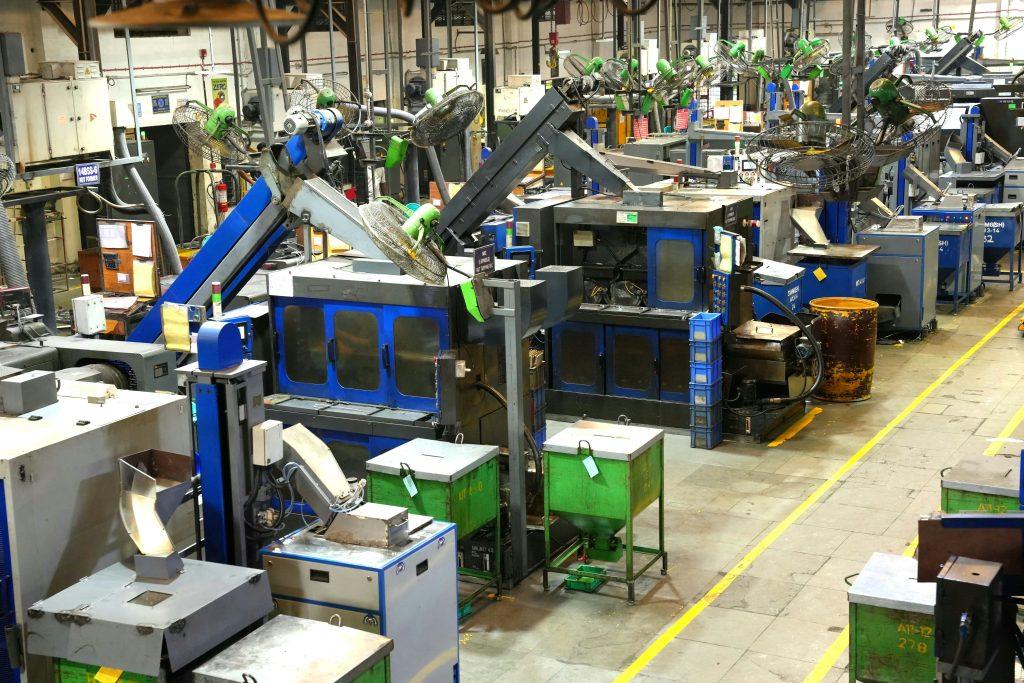
Reducing Downtime in Manufacturing through Real-Time OEE Monitoring.
In today’s competitive manufacturing landscape, equipment idling, unexpected stoppages and inefficient operations are more than nuisances; they’re real financial drains! For factory managers and operations leaders, reducing downtime in manufacturing isn’t just an aspiration, it’s a strategic necessity that directly impacts throughput, delivery performance and cost per unit.
The key to controlling downtime isn’t optimism – it’s visibility. And that starts with real time production monitoring using smart dashboard software that turns raw machine signals into actionable insights.
How real-time OEE monitoring brings the shop floor into focus.
Overall Equipment Effectiveness (OEE) has become the lingua franca of modern production management… it combines availability, performance and quality into a single score that tells you exactly how well your assets are performing against their potential. But OEE only becomes a tool for change when it’s measured live, with real-time data pushed to the people who can act on it.
Traditional batch reporting – waiting until the end of a shift or day to see performance – can hide emerging bottlenecks until they’ve snowballed into hours of lost production. Conversely, integrating real time production monitoring into everyday operations means operators and supervisors can see precisely when a machine starts to drift out of tolerance, slow down, or stop outright. That’s the moment where minutes, not hours, are saved!
Dashboard software like POET’s OEE solution brings this live data into a simple visual interface that’s accessible from the line level up to management screens. When team members can see up-to-the-second status, from machine availability to quality yield, they can respond much faster and with more context than ever before.
Grounded examples on the factory floor.
Consider a packaging line that intermittently slows due to an unbalanced feed – without real-time OEE, a team might only realise something is wrong after a shift review. By then, hundreds of units are at risk of defects and the line is already running behind schedule. With POET’s OEE dashboards showing live lineside metrics, that dip in performance is instantly visible. Teams can intervene before the issue leads to a full stoppage, dramatically contributing to reducing downtime in manufacturing.
In another example, a multi-machine cell experiences short, repeated stoppages. Without contextual data on each event, maintenance teams might chase symptoms rather than root causes. A live OEE readout places every stoppage in context – frequency, duration and impact – enabling faster downtime analysis and prioritisation.
Predictive maintenance – From reactive to proactive!
One of the most compelling dividends of real-time monitoring is enabling predictive maintenance. Reactive maintenance – fixing equipment after it fails – is a major source of unplanned downtime. By continuously feeding machine health and performance data into analytics systems, patterns begin to emerge well before failures occur, empowering maintenance teams to act at the right time rather than waiting for breakdowns.
This doesn’t require complex AI to be effective. Even relatively simple condition monitoring, such as tracking vibration thresholds, temperature trends or unexpected performance degradation, can signal when a spindle is wearing or a drive is losing efficiency! When such signals are surfaced through a unified OEE platform, teams can synchronise maintenance with planned stops or quieter shifts, vastly reducing lost production and supporting predictive maintenance planning across the plant.
Real-time data drives smarter scheduling.
Live production insight also transforms scheduling from a brittle plan into a resilient strategy. When a scheduler sees a key machine trending toward delayed availability, work orders and labour assignments can be shifted before the day’s operations are derailed. This is genuine optimisation rooted in reality; scheduling not on assumptions or yesterday’s reports, but on what’s happening right now on the shop floor!
“Dashboards” in this context aren’t dashboards for dashboards’ sake… they’re real-time command centres that feed both short-term decisions and longer-term planning cycles. That means production leads can allocate resources based on current needs rather than guesswork, helping ensure continuity of operations and further reducing downtime in manufacturing.
Bringing it all together…
Reducing downtime requires more than wall-chart KPIs and end-of-day summaries. It demands real-time production monitoring, supported by purpose-built dashboard software that makes shop-floor data visible, understandable and actionable. When combined with proactive strategies like predictive maintenance and deep downtime analysis, manufacturers gain the insight they need to act before small issues escalate into costly stoppages.
For manufacturers ready to move beyond spreadsheets and reactive firefighting, solutions like POET’s OEE system offer a clear path forward… live visibility, faster responses and sustained uptime improvements that translate directly to the bottom line.